

Masood Shaffaf, School of Human Cultures_Eng
Study Abroad in Japan ; Through the Eyes of a Pakistani Student
Masood Shaffaf, Department of Nutrition
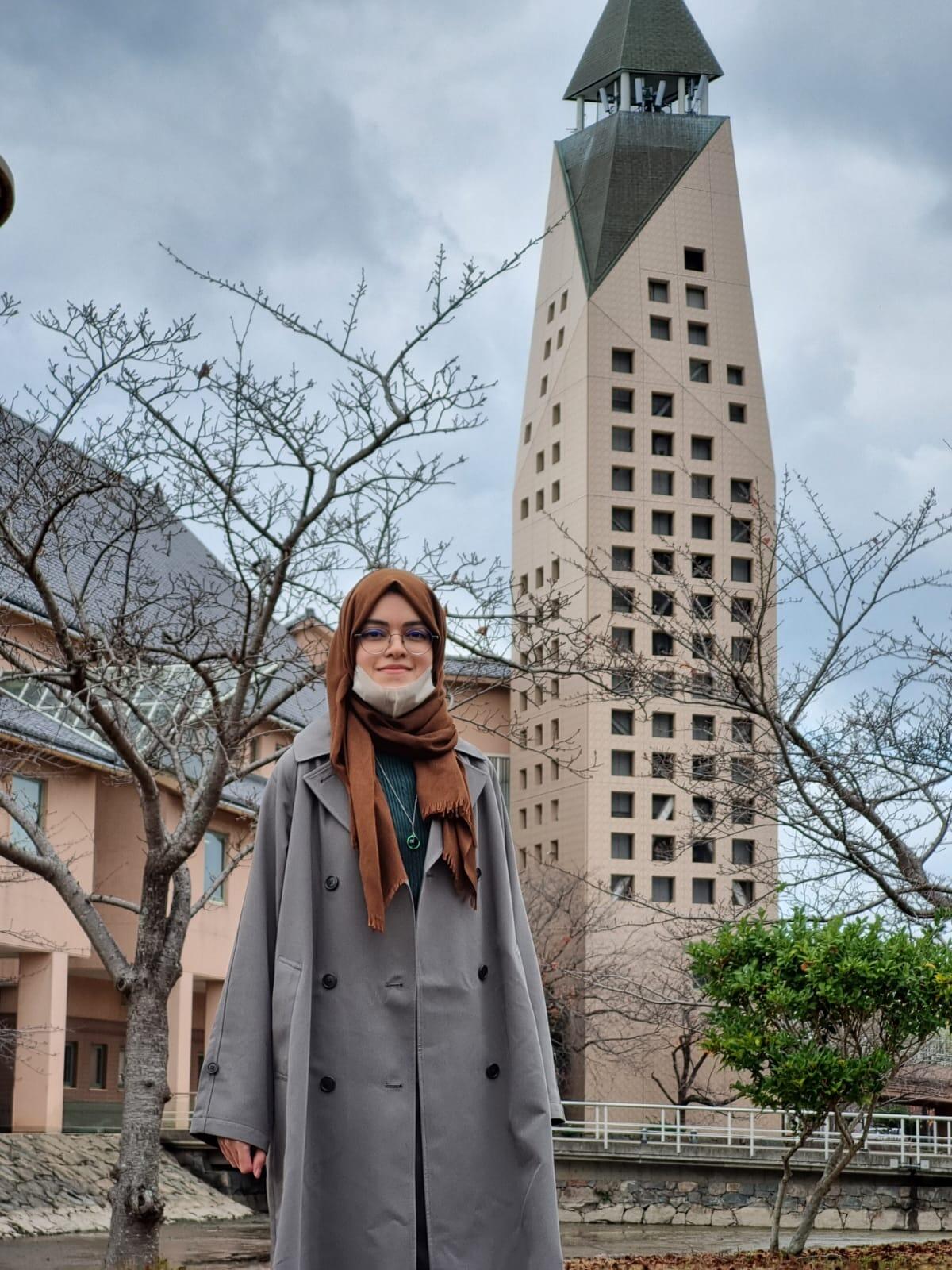
When I first began studying Japanese, I was fascinated by its depth and boundlessness, that's when I started dreaming of studying abroad in Japan. Adding to that I admired the healthy Japanese food culture, active lifestyle, long average life expectancy, and the globally well-known manners. These were the reasons I decided to enroll in the Department of Nutrition at The University of Shiga Prefecture. In 2024, that dream finally came true, and I began a new chapter of my life in Hikone City. Although I should have felt anxious being surrounded by unfamiliar people in a city I had never been to, all the university staff and my professors welcomed me with heartwarming smiles. Thanks to them, I never felt troubled.
Since classes began, I have been blessed with a fulfilling learning environment where I interact with students from various regions of Japan, international exchange students, and even doctoral students from abroad. I am truly grateful that the faculty members who teach us always understand our perspectives and levels of comprehension, and they explain even the most complicated matters with great care and kindness. They also create learning opportunities that encourage each student to act independently and make the most of their abilities, so I make new discoveries every day.
Outside of classes, there are many clubs and circles where I can interact with students from other faculties, and participating in activities that match my interests has been a great way to refresh myself. As a member of the calligraphy club, I created postcards and decorated bamboo leaves with tanzaku for Tanabata, which helped me better understand Japanese traditions. Using calligraphy, I also made New Year's cards to give to my friends and teachers at the end of the year. Some people even mistook them for otoshidama envelopes, which became a funny yet memorable story.
During the summer vacation of my first year, I had a one-day fieldwork activity called the "Lake Biwa Cultural Fieldwork." We visited the Agricultural Technology Promotion Center in Shiga Prefecture, toured an Omi beef processing plant, and visited the Lake Biwa Museum. Through these experiences, I learned about Shiga's geographical features, the state of its agricultural products and farming technologies, and the plants and animals native to Lake Biwa. I was able to gain a better understanding of the region I live in. Additionally, for an assignment involving on-site research, I visited growers of the Minakuchi Kanpyo gourd. Hearing directly about GI certification and the current production situation allowed me to compare the cooking methods of bottle gourd in Japan with those in my home country. This was a unique experience that could only be had in Shiga.
Starting from the second semester, I had cooking classes, where I prepared Japanese dishes that were completely unfamiliar to me, as well as Chinese and Western dishes. Not to exaggerate, tasting food I had never had before opened my eyes to worlds I had never seen. Furthermore, as someone from the Middle East, it wasn't easy to adjust to the increasingly cold weather during the second semester. However, during the cooking class, I discovered something for the first time: until then, I had only eaten basmati rice, which has the effect of cooling the body during hot seasons. Because of this, I had assumed rice was difficult to eat in winter. But Japanese rice is different--it warms the body in cold seasons. I learned this firsthand.
Before taking the physical education course where we created and followed our own training menus in the gym, I had little interest in exercise or its importance. But instead of thinking, "I don't want to exercise because it's cold," I tried changing my mindset to "If I exercise, my body will warm up." This made exercising enjoyable and easier to continue. I realized that simply reframing something necessary for achieving my goals as just one of the means makes it much easier to carry out. On January 10, 2025, it snowed in Hikone, and thanks to the exercises I learned I was able to fully enjoy the breathtaking sight of the world turning pure white. I learned that with just a little effort--engaging in proper exercise and eating proper meals--I could improve my sleep quality and keep my body in excellent condition. This may sound obvious, but as a student of nutritional sciences, it was a significant lesson.
When my second year began, I expected the seasons to repeat just as they had the previous year. But the joy of waiting for the cherry blossoms felt even stronger, and this year's blooming felt completely different from last year's. The joy of anticipating something for a whole year felt sweeter than the joy of seeing it for the first time. Cycling to school every morning under the cherry trees became something I looked forward to.
In May, I had the opportunity to participate in the university's regional collaboration project "Mandocoro Challenger" contributing to the tea-picking of Mandocoro tea, a specialty product of Shiga Prefecture. I learned the importance of proper hand pressure and ways to identify the right leaves to pick. It was raining that day, so the sensation of touching the wet tea leaves with my fingertips and the gentle snapping sound they made were soothing and truly healing.
I also took the "New Sports" course in the first semester, where I tried sports I had never heard of. I came to understand that sports are not only for athletes--they can be enjoyed casually with anyone at any time, caring not for who loses and who wins. Since the class was held on Fridays, it felt like a reward for working hard all week and served as a great way to let loose and relax. This class also helped me build the habit of being active in the morning and approaching classes with a positive mindset.
After experiencing winter in Japan, the summer felt even hotter than in the Middle East. However, Japan has an incredible variety of delicious ice creams, which felt like the perfect way to beat the heat. Personally, I felt that summer here was short--only about four months--which made it pass quickly compared to the Middle East. There were also many useful summer goods in Japan that I wish existed in the Middle East; thanks to them, even the humidity felt more bearable.
Lastly, now that I am in the second semester of my second year, the curriculum includes increasingly advanced nutritional sciences, along with practical training in areas such as lunch service management and clinical nutrition. These opportunities frequently test my abilities but it's through these practical classes that I was able to develop teamwork and cooperation skills, while also becoming more aware of my personal challenges. I am grateful every day for the guidance of my instructors who help me find my way out.
There were times when my voice trembled with nervousness, when I felt so embarrassed I wished I could disappear, or when I messed up so badly I didn't know whether to laugh or cry. These experiences taught me that university life isn't all perfect. However, whenever I reflect on who I was a year ago, I am surprised by how much I have grown. Things I once struggled with or worried about are now things I can do with ease. No matter the situation, I remind myself that everything I do now is helping the future me. Thus, I want to continue making plenty of mistakes and keep learning, so that in the end, my teachers will feel that I was a student worth teaching.
(December, 2025)